Building math lessons: The playful side you never knew existed

Two people smiling in separate circles; one has a cartoon corgi icon, the other shows math blocks—perfect for celebrating early literacy skills—all set on a cheerful yellow background.

When you think of what goes on behind the scenes of building Amplify Classroom lessons, you probably envision carefully calculated math formulas and complicated equations, right?

Not exactly. Meet Sara Barring and Sean Sweeney from our interaction development team! They create animations and interactions for many of our most popular math lessons, and one day they decided to record some of their work sessions. What began as a simple “Wouldn’t it be fun…” conversation turned into something pretty remarkable: a front row seat to their joyous exploration of math.

Sean and Sara spend their days bringing math problems to life using Activity Builder, Amplify Classroom’s lesson-building tool. Their goal is to encourage students to explore their own thinking, moving beyond traditional right-and-wrong feedback. Instead of being told “no” when a guess is off, students get visual Responsive Feedback that demonstrates the meaning behind their thinking. In the grade 6 lesson Weight for It, for example, the animation shows them what would happen if the dog actually weighed what they guessed!

Sean and Sara help create a safe, playful space where making a mistake isn’t a failure, but a visual stepping stone that encourages students to try again. This creative process is exactly what they decided to capture on camera. Their video series, “Graph Time With Sara and Sean,” reveals what happens when pure curiosity guides work in graphing mathematics. Each episode opens the window into a genuine, surprising discovery, showing the magic happens when you stop worrying about perfection. Watching these videos, even those who feel intimidated by math or think math isn’t for them may feel inspired to try it themselves.

Redefining mistakes as happy accidents

In any field, the word “mistake” can feel loaded. But for Sara and Sean, the process of creating math animations is less about avoiding mistakes and more about seeing what happens.

A great thing about working in Activity Builder’s graphing calculator, Sara notes, is that you can immediately see how every adjustment affects the animation. This instant visibility helps shift your perspective—an unexpected result isn’t a failure, but a happy accident. According to Sara, these moments provide a pivot point into a new, unplanned direction.

Take one episode of “Graph Time” that wouldn’t exist without a happy accident Sean had while trying to create a firework animation for one of our lessons. That “mistake” led to the discovery of unexpected mathematical patterns that the team may not have found otherwise. These patterns seem to magically emerge from simple sine and cosine functions, revealing flower-like designs, perfect circles, and intricate geometric shapes that feel limitless in their variety, proving that mathematical beauty often reveals itself through curious experimentation rather than careful planning.

Sara and Sean hope to show viewers the reality of their work–with all the struggles, detours, and joy. You might expect someone who creates math animations all day to have their steps carefully mapped out. “We don’t,” Sean says, “and that’s part of what we like about it.”

The ripple effect: Transforming math culture

Sara and Sean’s playful approach to building curriculum content creates waves they hope will extend beyond their own creative joy, inspiring a new generation of math explorers.

For teachers, these videos offer more than just creative techniques—they provide a blueprint for shifting classroom culture. Sean emphasizes that viewers are seeing “the real work they do every day,” providing educators with an authentic model for bringing genuine excitement to mathematical learning. Sara, drawing from her teaching background, recognizes the transformative power of just changing the narrative: “Math gets such a bad rep a lot of the time, so even if Graph Time with Sara and Sean just offers a positive rebrand on some things, I think that’s powerful, too.”

When students see people having fun with math, through teachers or videos like “Graph Time With Sara and Sean,” they begin to see math as an invitation to explore. Sean and Sara are hoping they can help students find their own magic, making math less about intimidation and more about fun.

Check out Sara and Sean’s videos to see their graphing creations in action!

Ready to create your own amazing math adventures? Check out our Lesson Building Toolkit for bite-size tutorials on making your own lesson creations with Amplify Classroom.

Introducing our 2023 Science of Reading Star Award finalists!

Roll out the red carpet and shine those spotlights—it’s time to meet the 25 finalists for our 2023 Science of Reading Star Awards!

These educators and leaders help light the way for the next generation. They’ve implemented Science of Reading principles and guided their students toward lifelong literacy. They’ve demonstrated expert change management and professional development. Get ready to meet some of the brightest minds in education as we celebrate their achievements and see what makes them truly stellar!

Join our virtual event and awards program on May 23.

But first…meet our 2023 finalists! Below, you’ll hear from the nominees themselves, as well as the colleagues who nominated them, about what makes them stars.

The Changemaker Award

For exemplary leadership in guiding a district through a shift to the Science of Reading.

And the finalists are…

Heather Campbell
Learning Coach, Sunset Elementary, Washington County District, UT
Why she’s a star: “Heather’s philosophy that all students can learn to read if given proper instruction has changed the data. Our school made the change and the data is showing our students are thriving.” —Shelli Campbell, Learning Coach

Javonna Mack
Lead Content Teacher, Caddo Parish School, LA
Why she’s a star: “Whether working with students or teachers, Mrs. Mack keeps best practices grounded in the Science of Reading at the forefront. She constantly strives to build teachers’ expertise in teaching students to read through content-rich professional learning communities, often on Saturdays or after the workday has ended.” —Shannon Southwell, Lead Content Teacher

Aaron Jura
Reading Interventionist, Bloomingdale, IL School District
Why he’s a star: “Aaron has been the catalyst for our entire district embracing this shift to the Science of Reading, and we are just at the beginning of this amazing journey.” —Nicole Gabany, Reading Interventionist

Nicole Peterson
Director of PreK–8 Education, Sampson County Schools, NC
Why she’s a star: “She has created, initiated, implemented, monitored, evaluated, and adjusted processes and systems to ensure that teachers have access to resources, training, materials, and professional development to ensure that all students gain equitable access to high-quality, evidence-based instruction.” —Matthew McLean, Director, PreK–8th Grade Education

Virginia Quinn-Mooney
Teacher, Northville Elementary School, CT
Why she’s a star: “Virginia has gone from one person with a personal commitment to advancing her literacy knowledge. She has now impacted countless educators, parents, etc., with her tenacity and learning journey.” —Nicole Gregory, Teacher

The Data Dynamo Award

For commendable use of data to align a literacy system and maximize student achievement

Shennoy Barnett
Kindergarten Teacher, South Smithfield Elementary, NC
Why she’s a star: “My objective is to help as many children as I can become fluent readers and critical thinkers. As a literacy specialist here for just four months, I made great strides with literacy with my students.” —Shennoy Barnett, Kindergarten Teacher

Anne Elizabeth Carter
Kindergarten Teacher, Wake County District, NC
Why she’s a star: “Through systematic and explicit phonics instruction as well as targeted language comprehension instruction—using texts that incorporate science and social studies content as well as build knowledge systematically—my kiddos were TRULY learning how to read accurately and fluently.” —David Gaudet, Principal

Bethani Ploegstra
Kindergarten Teacher, Union Colony Elementary, CO
Why she’s a star: “She takes data from mCLASS® DIBELS®, Lexia, and SchoolPace (part of our reading curriculum), as well as formative feedback from what she hears and sees students doing daily in the classroom, to immediately adjust what she presents next to students, whether individually, in small groups, or whole class.” —Mandy Bailey, Assistant Principal

The Knowledge Builder Award

For showing the world that the Science of Reading is more than just phonics, and empowers students with knowledge from elementary to middle school

Corey Beil
Instructional Interventionist, Quakertown Community School District, PA
Why he’s a star: “He incorporated literacy into his daily math instruction by providing our students with opportunities to understand and connect with the content more deeply. Our students were exposed to practicing literacy concepts while expanding their mathematical knowledge and foundational understanding.” —Julianne Pennabaker, Teacher

Kim Smaw
Principal, Rosalyn Yalow Charter School, NY
Why she’s a star: “She was able to persuade the learning community to adopt the Science of Reading, firmly convincing them that this curriculum could empower students to gain rich learning experiences.” —Deirdre Frost, Reading Intervention Specialist

Angie Dutton
Instructional Coach, Onslow County Schools, NC
Why she’s a star: “Her positive attitude about the Science of Reading is contagious and is most likely why other educators feel comfortable reaching out to her for questions and guidance.” —Stacey Horne, Instructional Coach

Nicole Brodie
ELA Grade 7 Teacher, Long Middle School, GA
Why she’s a star: “She encourages her students to use their [voices] for change and impact and supports them in their learning process academically, [socially, and emotionally].”
—Renee Dawson, Grade 7 English Language Arts Teacher

The Intervention Innovator Award

For admirable use of intervention strategies to get at-risk readers back on track

Suzanne Maddox
RTI Teacher, Robertson County Schools, TN
Why she’s a star: “Mrs. Maddox reviewed individual student data, worked with teachers, and began using CKLA Skills and the intervention materials provided with this curriculum to continue a sounds-first approach to meeting the individual needs of students.” —Brooke Callis, RTI Teacher

Sara Thornton
Reading Interventionist, Senior Team Lead, Schmitt Elementary, CO
Why she’s a star: “Sara’s enthusiasm for and dedication to her work has been an inspiration to all involved and has resulted in a successful transition to the Science of Reading—as evidenced by our students’ amazing academic growth!” —Hayley Gunter, Reading Interventionist, Senior Team Lead

Markaya Aga
Reading Interventionist, Merit Academy, CO
Why she’s a star: “Since she has come on board at our school, the mindset around literacy and the growth of our programming [has improved] ten-fold. We need more educators like Markaya!” —Allison Hanson, Reading Interventionist

The Language Luminary Award

For outstanding success in developing the skills and strengths of emergent bilingual students

Wanda Ramirez
Grade 2 Teacher, El Sol Science and Arts Academy, CA
Why she’s a star: “We used to emphasize to students that what they know in one language cannot be used in the other language. Now, as a dual-immersion educator, I have the opportunity to change that mindset, teach my students to embrace their native [language], and empower them to use their entire linguistic ability. It’s a very powerful thing to be able to do.” —Wanda Ramirez, Grade 2 Teacher

Esmeralda Martinez
Kindergarten Teacher, Compass Community Schools, TN
Why she’s a star: “She has consistently worked on improving her teaching methods, tried new ways to engage the class, and worked diligently to support all of our students.” —Rachel, Marinari, Teacher

Christine Black
ESL Teacher, North Dover Elementary School, NJ
Why she’s a star: “We have a rapidly expanding ESL population, and Mrs. Black works tirelessly to ensure that her students are expanding their ELA skills in accordance with the major tenets of the Science of Reading.” —Dawn Gawalis, ESL Teacher

Rookie of the Year Award

For showing the world that the Science of Reading is more than just phonics, and empowers students with knowledge from elementary to middle school

Caitlyn Cockram
Teacher, Patrick County Schools, VA
Why she’s a star: “We have offered professional development in vocabulary and implementing SOR strategies, and Caitlyn is always one of the first teachers to sign up. She is dedicated to improving student achievement through research and evidence-based practices.” —Callie Wheeler, Teacher

Andrea Mason
Academic Interventionist, County Line Elementary School, GA
Why she’s a star: “Making the shift from balanced literacy to the Science of Reading hasn’t always been easy. But I continue to research and implement these best practices with my students because I can see that they are now on a path to becoming strong readers.” —Jennifer Ezell, Academic Interventionist

Mallory Pendergast
Phonics Teacher, Literacy Interventionist, Circle City Prep, IN
Why she’s a star: “As a kindergarten teacher, she led 100% of her scholars to be reading on grade level in the first quarter and maintained that momentum through the first semester.” —Sami Hyde, Senior Instructional Coach

ESSER Ace Award

For notable and innovative use of stimulus funds to help kids rediscover the joy of reading

Stephanie Hurst
District Literacy Specialist, Maple Avenue Elementary, NH
Why she’s a star: “She is also a voice on the utilization of [the] ESSER Fund—using the distribution of funds per federal protocol to ensure that the district’s lowest-performing schools have access to quality instructional materials and professional development all grounded in the Science of Reading.” —Mark Blount, K–12 Literacy Specialist

Callie Wheeler and Sara Vernon
Instructional Coaches, Patrick County Schools, VA
Why Callie’s a star: “Mrs. Wheeler played a key role in creating a culture of literacy within our schools, where the Science of Reading is central to the education of our students.” —Sara Vernon, Instructional Coach
Why Sara’s a star: “Sara has worked tirelessly to make the shift from the vision that was grounded in balanced literacy to one that is now making waves in Southwest Virginia with its Know Better, Do Better, Be Better approach to reading instruction.” —Callie Wheeler, Instructional Coach

Edie Bostic
Literacy Coach, Gallia Local, OH
“As a teacher, district Title I coordinator, elementary principal, and now district literacy coach, she continually champions the students under her care and is passionate about those students receiving the highest levels of instruction.” —Leslie Henry, Principal

Inspired? We are! Register to join our May 23 Science of Reading Star Awards virtual ceremony!

More to explore

Learn with and from other top-notch educators like you through our family of podcasts.

USBE Data Analysis for K-3 Reading Assessment Program

Introduction

mCLASS Assessment: Acadience™ Reading

How it works: Quickly identify the needs of each student and inform next steps with instant analysis, reports, and instructional planning tools included in the only licensed mobile version of the research-based Acadience Reading assessment.

  • Use short, 1-minute fluency measures for foundational reading skills.
  • Replace manual calculations with instant results and recommended activities.
  • Compare student progress with predictive, research-based benchmark goals.
  • Track progress and target instruction to individual student needs.
  • Support decision-making at every level using aggregate reports.
  • Translate class- and student-level reports into individualized instruction using the Now What?Tools.
  • Get a more complete view of early literacy skills with the new mCLASS:Early Literacy Measures (ELM).
Enrollment for mClass

Please review the Utah Enrollment for mCLASS document for important information about the rostering process for LEAs in Utah.

Benchmark Windows

The USBE has required that each Acadience Reading testing benchmark window occur within the below dates:

BOY — the first benchmark before October 14
MOY — the second benchmark between December 1 and February 5
EOY — the third benchmark between the middle of April and June 15

Benchmark windows for LEAs are set to the state benchmark window dates in mCLASS. Each LEA is to have 2-4 week benchmark period that is within the state benchmark window dates and LEA leaders are to share those dates with staff. The benchmark windows in mCLASS are set to the state benchmark window dates; not the LEA benchmark window dates and this can not be changed in mCLASS. If a student moves into your LEA and your benchmark window is closed, but the state benchmark period is still open, the student must be benchmarked. Should your LEA need an extension of a benchmark window beyond the close of the state benchmark windows, that must be approved by the USBE Assessment Department. Once the benchmark window closes, do not give the benchmark to a student, instead, educators can progress monitor the student on the measures they would have received a benchmark in order to get the students current instructional levels.

If you have questions regarding your current benchmark window dates, feel free to reach out to Amplify Customer Services at help@amplify.com.

Acadience Reading Benchmark Invalidations

Before you invalidate a benchmark probe, review the USBE’s list of acceptable reasons for invalidating on the Frequently Asked Questions: Acadience Reading Invalidations document. If a district/charter has a significant percentage of invalidations, contact and further action will be deployed. If you believe an invalidation is required, please contact your District/Charter Literacy Director. If they need support, they can contact Sara Wiebke, sara.wiebke@schools.utah.gov, to request an invalidation.

Progress Monitoring

The impact of progress monitoring

Progress monitoring is the most powerful tool we offer with regards to student achievement.

“Scores for Daze increase more slowly than they do for other Acadience Reading measures, so more frequent monitoring may not be as informative. For students who need to be monitored on Daze, we recommend monitoring once per month.”
Progress Monitoring with Acadience Reading 
© Acadience Learning
October 2012

The Acadience Reading authors recommend progress monitoring students in the Well Below Benchmark category once every 7-10 days (and once every 10-12 days for students in the Below Benchmark category).

Progress monitoring is the practice of testing students briefly but frequently on the skill areas in which they are receiving instruction, to ensure that they are making adequate progress. When students are identified as at risk for reading difficulties, they can receive progress monitoring testing more frequently to ensure that the instruction they are receiving is helping them make progress. (Acadience Learning/October 2012, Progress Monitoring Guide)

The purposes of progress monitoring are:

  • to provide ongoing feedback about the effectiveness of instruction,
  • to determine students’ progress toward important and meaningful goals, and
  • to make timely decisions about changes to instruction so that students will meet those goals.

How to progress monitor?

  • Select students for progress monitoring
  • Select Acadience Reading materials for progress monitoring
  • Set progress monitoring goals
  • Determine the frequency of progress monitoring
  • Conduct progress monitoring assessment
  • Access data through class and student reports
  • Evaluate progress and modify instruction.

The key to progress monitoring: Instruction should link to progress monitoring and progress monitoring should link to instruction. They should run parallel and merge as one to confirm student growth in reading.

Check your progress monitoring fidelity report in mCLASS to ensure you are on track with these students. For more information regarding progress monitoring guidelines, visit the official progress monitoring guidelines.

Support Team

Amplify Customer Services

(800) 823-1969
Monday to Friday, 5 a.m. to 5 p.m. MT
help@amplify.com

Educational Support Team

Pedagogical Questions
(800) 823-1969
Monday to Friday, 5 a.m. to 5 p.m. MT
edsupport@amplify.com

For more information, please contact:

Sarah McCarty
Associate Director, Educational Partnership
(812) 593-5776
smccarty@amplify.com

Donna Bright
Educational Partnership Manager
(303) 960-3772
dbright@amplify.com

Robert McCarty
Regional Director of Educational Partnership
(435) 655-1731
rmccarty@amplify.com

Cydnee Carter
Assessment Development Coordinator
(801) 538-7654
cydnee.carter@schools.utah.gov

Liz Williams
Elementary ELA Assessment Specialist
(801) 538-7542
Liz.williams@schools.utah.gov

Sara Wiebke
Literacy Coordinator
(801) 538-7935
sara.wiebke@schools.utah.gov

Krista Hotelling
K-3 Literacy Specialist
(801) 538-7794
krista.hotelling@schools.utah.gov

Christine Elegante
K-3 Literacy Specialist
(801) 538-7551
christine.elegante@schools.utah.gov

Julie Clark
K-3 Literacy Specialist
801-499-2515
julie.clark@schools.utah.gov

Melissa Preziosi
Assessment Data Specialist
(801) 538-7949
melissa.preziosi@schools.utah.gov

Resources

Helpful tips and guides
mCLASS:Acadience Reading tutorials
Technical resources

Amplify Enrollment This guide walks you through the necessary steps to complete enrollment using the manual enrollment tools on Amplify Home. It shows you how to manage staff, student, and class assignment information, and maintain the accuracy of your staff, student, and class assignments.

Devices & Requirements Ensure mCLASS is compatible with your devices and systems for optimal performance and support.

Remote Assessing

Videos:

Remote Assessment Guidance from the Acadience Team:  
mCLASS®: Acadience® Reading (formerly known as DIBELS Next)

Key Points:

Before you assess:

1. Determine how you will show student materials and score in mCLASS at the same time. 

  Description

Description

Recommended set up

  • One computer for video conferencing and sharing student materials.
  • One touchscreen device for scoring in mCLASS.
Modified set up
  • One computer.

Note: mCLASS app is optimized for touchscreen; scoring with a mouse may need more practice.

2. Familiarize yourself with the digital copies of student materials.

3. Schedule virtual meetings with students. To communicate with English-speaking caregivers, consider sending this email or video. To communicate with Spanish-speaking caregivers, consider sending this email or video.

4. Determine how you will handle scenarios where there’s a lag:

  Description
Record the meeting
  • Before the assessment begins, press the recording button on your video conferencing tool.
  • After the virtual meeting, listen to recording and rescore in mCLASS if needed.
  • Pick a decision rule for how to score ambiguous items and be consistent. For example, if you decide that you will give a student the benefit of the doubt and mark ambiguous similar sounding items correct when you can’t quite hear their answer, do this for all students you assess.
Use a phone
  • Before the assessment begins, call caregiver’s phone using your phone (type *67 before your number if you want your number to be hidden).
  • Ask the caregiver to press the speaker button. 
  • Mute yourself and your student on the virtual learning platform.

While you assess: 

1. Take the opportunity to connect individually with your students as they experience so much change. Don’t make the session solely about testing, and remind caregivers and students that the assessment is a way to see how you can best tailor instruction.

2. Make student materials visible to your student.

For Maze, choose the model that works best for you:

Enter results into the mCLASS web reports

  • Students complete online Maze during a video conference
    • Put a link to the student assessment site (mclass.amplify.com/student) and the student’s credentials into the chat box (learn how to generate student credentials in this video)
    • Ask your student to complete Maze.
  • Students complete online Maze outside of a video conference (caregiver support is needed with log-in)
    • To provide student credentials and instructions to English-speaking caregivers, consider sending this email and video. To provide student credentials and instructions to Spanish-speaking caregivers, consider sending this email and video.
  • Students complete Maze on paper
    • Locate the benchmark Maze Acadience Learning’s site.
    • Print a copy of the form you need (e.g. BOY) for each student in your class.
    • Send the form home in a sealed envelope with students, mail the form to caregivers, or have caregivers get forms via school-based pick-up. Provide instructions not to open the envelope until the student is ready to take the assessment.
    • Provide parents with instructions on how to proctor the assessment for their child. They need to:
      • Give the form to their child
      • Sit with their child and read the instructions and practice items
      • Tell their child to stop when 3 minutes has elapsed
      • Send screenshots of their child’s work via email or text, or return the completed form to the school in a sealed envelope provided by the school.
  Guidance
Acadience:Reading 

Use the share screen feature to display student materials on your screen.

Optional next step for measures that have student materials:

Zoom users: grant your student control of your screen so you can see their cursor as they read:

  • Click “Remote Control” and select your student’s name in the dropdown.
  • Ask your student to use their cursor to point to words as they read.

Note: For Mac OSX, you will need to give Zoom access in the Accessibility tab in the Privacy and Security preferences of your Mac. For more information on giving Zoom access in Security and Privacy, click here.

3. Score in mCLASS.

Student materials

  Benchmark Progress monitoring
Acadience Reading (formerly known as DIBELS Next) Available for free download on the Acadience Learning website

Utah – USBE Data Analysis for K-3 Reading Assessment Program – New

To view this protected page, enter the password below:


Change management with the Science of Reading: Data is your compass

We know how children learn to read, and we know how to teach children to read—all thanks to the Science of Reading. That’s why it’s so important to use literacy programs grounded in data. But we also know that the process of shifting to data-supported literacy instruction is a whole science unto itself!

Fortunately, we know not only how to use data to drive instruction, but also how to use it to manage and drive successful educational change. In this post, we’ll explore the role data can play in implementing a new curriculum, which data to study at each phase of integration, and which assessments you can use to capture the data you need.

The power of data-based instruction and change management

“The Science of Reading represents a big shift in what folks are doing,” says Sara Thornton, a reading interventionist with Denver Public Schools in Colorado.

It’s a shift at the teacher level, it’s a shift at the school level, and it’s a shift at the district level. It takes a whole system.

—Sara Thornton

That’s why data is crucial.

To successfully navigate this seismic a shift, you need to anchor yourself in all kinds of data: literacy data, professional practice data, implementation data, and student performance data.

This data allows you to personalize instruction, track development, and evaluate your teaching strategies at the classroom level—and your implementation at the school or district level. It also guides decision-making, ensuring that your new curriculum is not just well-intended, but well-executed and effective.

Using data to drive instruction, implementation, and more

Here we’ll give you a glimpse at the types of data that can guide you through each stage of change.

Stage 1: Exploration. This is where stakeholders gather information, make the case for change, and begin to build buy-in.

To guide your efforts, you’ll need to collect the following types of data:

  • Baseline literacy data that shows where students are starting from, specifically in these foundational skills: phonemic awareness, phonics, fluency, vocabulary, and comprehension.
  • Professional practice data to help you gauge educators’ current methods and understanding around the Science of Reading. This data can come from knowledge surveys, classroom observation forms, and more.
  • Resource analysis data to help you understand the instructional tools you’ll need, in the context of relevant budget constraints.

Stage 2: Adoption. At this stage, you and your teams will evaluate, purchase, and pilot programs aligned with Science of Reading standards. We recommend tracking the following essential data measures alongside rubric-based resource evaluations:

  • Literacy skill acquisition data such as unit tests, universal screening assessments, and formative daily/weekly assessments that will help you gauge the effectiveness of your piloted program.
  • Stakeholder feedback that reflects the school community’s response to the program such as surveys; interviews; and conversations with teachers, family members, and district-level educators.
  • Usage data, which is readily available in curricular resources with digital components, e.g. How are teachers and students using the program? How often do they log on, access given resources, etc.?

Stage 3: Initial implementation. Here, the newly adopted resources are in place and teachers begin to shift their practices. The right data in this phase will help you monitor the fidelity of implementation and track student growth. The following types of data are key:

  • Instructional practice and delivery data such as lesson plan analyses, observation, usage logs, and more to show how classrooms are applying the new curriculum and practices.
  • Student performance outcomes to measure student mastery. Data types include formative and summative unit assessments and progress monitoring.

Stages 4–5: Full operation, innovation, and sustainability. Here’s where you see the Science of Reading come to fruition, and where you build systems to maintain student growth. The data collected in earlier stages remains essential for guiding you through these final phases. It will serve as a touchstone as you gather and analyze additional data to help you make regular adjustments and modifications to your programs. We recommend continuing to monitor student progress, deepen your growing knowledge base—and celebrate how far your whole community has come.

More to explore

For more information, check out our comprehensive guides to literacy change management and the data that will guide you!

Celebrating the 2026 Science of Reading Star Awards finalists

Three ribbons on a blue background: a yellow ribbon with paper symbolizing personalized learning, a blue ribbon with a rocket representing MTSS strategies, and an orange ribbon with a star.

Every day, teachers and education leaders guide students toward a future lit up by literacy. It’s not always easy, especially for those championing shifts toward programs grounded in the Science of Reading.

That’s why we’re thrilled to celebrate the finalists of the 2026 Science of Reading Star Awards! These awards recognize educators, schools, and districts who go above and beyond to make evidence-based instruction a reality.

Empowering students through literacy

The Science of Reading Star Awards shine a beacon on the champions of literacy—the educators putting research into action.

Studies show that systematic phonics instruction leads to significantly higher achievement, particularly for students experiencing reading difficulties. Literacy instruction grounded in the Science of Reading strengthens critical thinking by building the vocabulary and background knowledge students need to make meaning from complex texts.

But shifting to this instruction is about more than swapping programs—it’s about leading change and inspiring others. With these awards, we celebrate the educators and districts whose innovative approach does just that.

Here are this year’s categories and finalists:

  • The District Captain: For the district that exemplifies strong Science of Reading practices across the board
    • Keppel Union School District, CA
    • Traverse City Area Public Schools, MI
    • DeSoto County School District, MS
    • Colton Joint Unified School District, CA
  • The Literacy Legend: For the school that’s seen significant reading gains among their students school-wide when using the Science of Reading
    • Albuquerque Collegiate Charter School, NM
    • Faircrest Memorial Elementary School, OH
    • Grantsburg Elementary School, WI
  • The Background Knowledge Builder: For showing the world that the Science of Reading empowers students with knowledge, context, and vocabulary from elementary through middle school
    • Sara Allen, Spring Hill Unified School District 230, KS
    • Joy Villahermosa, North Slope Borough School District, AL
    • Jesse Muehler, St. John-Emmanuel Lutheran School, IN
  • The Changemaker: For showcasing exemplary Science of Reading routines and practices, and serving as an inspiration to others on the journey
    • Olivia Eastwood, Dedham Public School District, MA
    • Amy Sell, Lower Dauphin School District, PA
    • Rob Murray, Romeo Community School District, MI
  • The Comprehension Champion: For fostering deep understanding and critical thinking by expertly guiding students to make meaning from complex texts, ask thoughtful questions, and connect reading to their world and experiences
    • Kiera Bridley, Webster School District, WI
    • Sandi Bourque, Ascension Parish School District, LA
    • Rebecca Zandbergen, Kamaile Academy Public Charter School, HI
  • The Data Dynamo: For expertly using data to drive instruction within a Multi-Tiered System of Supports framework, identifying student needs with precision, and implementing targeted interventions that accelerate literacy growth for every learner
    • ZaTaya Rivenbark, Charleston County School District, SC
    • Yaneth Acosta, Buncombe County School District, NC
    • Diana Van Osdell, Northwestern School Corporation, IN
    • Kelly Scheurich, Stratford Public Schools, CT
  • The Language Luminary: For outstanding success in developing the skills and strengths of multilingual/English learners
    • Melissa García, Passaic Public Schools, NJ
    • Maria Monsivais, Cicero School District 99, IL
    • Yessenia Viera, Carthage R9 School District, MO
    • Jennifer Gomez Vallejos, Buncombe County School District, NC
  • The Science of Reading Rookie: For a teacher in their first three years of teaching already making strides with the Science of Reading
    • Johanna Vargas, Grand Island Public Schools, NE
    • Christian Watkins, Cornerstone Prep Denver, TN
    • Marissa Riley, Urbana School District 116, IL
  • The Writing Whiz: For integrating writing instruction with the Science of Reading, cultivating articulate and confident writers through innovative and effective practices
    • Joandra Mendoza, Rome City School District, GA
    • Jennifer Csolkovits, Walton-Verona Independent School District, KY
    • Caitlyn Bacom Dominguez, Cambridge Public School District, MA
    • William Strunk, South Bend Community School Corporation, IN

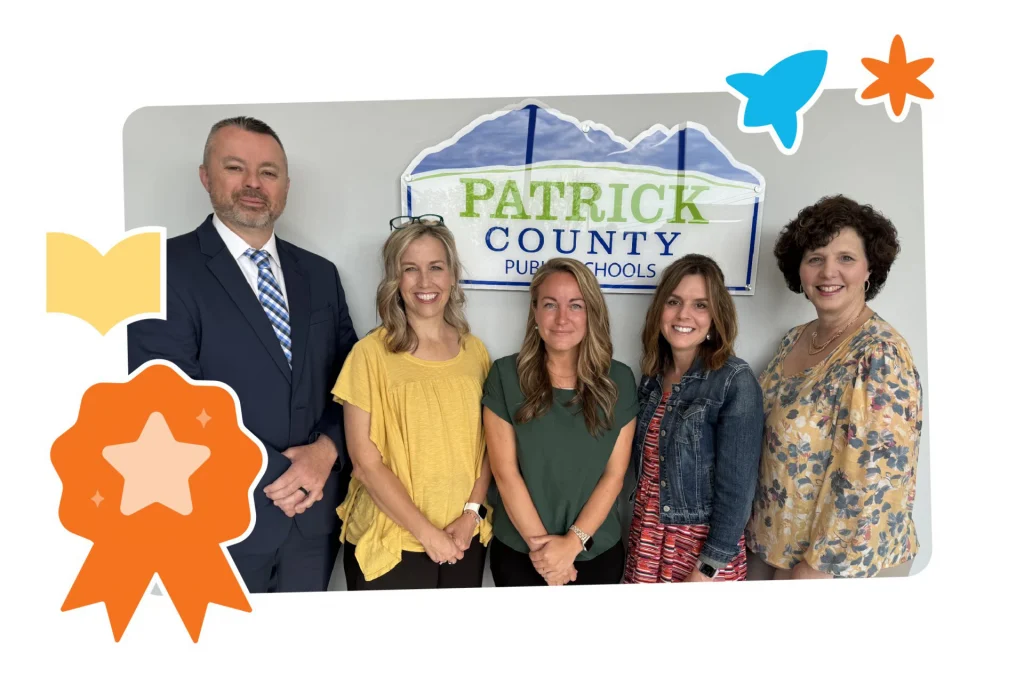
Small district, big change: Patrick County’s journey with the Science of Reading

In rural southwest Virginia, Patrick County Public Schools—a small district with big ambitions—has redefined early literacy through a transformative approach to reading instruction.

Teachers and leaders are shifting long-held instructional practices and embracing a Science of Reading-based framework. With the dedication of instructional coaches like Sara Vernon and Callie Wheeler, this district is building classrooms full of proficient readers and shaping a new culture of reading.

This commitment to reimagining literacy instruction has earned Patrick County Public Schools the Science of Reading Star Awards District Captain award—a testament to the district’s vision for improved student reading outcomes.

Before: Reading instruction challenges

Before this shift, reading instruction in Patrick County matched familiar approaches across the country, grounded in programs like Jan Richardson, Lucy Calkins, and Fountas and Pinnell. Educators like Wheeler and Vernon initially relied on balanced literacy and whole language techniques, believing that increased exposure to texts alone could help children learn to read.

However, especially during the pandemic, they began to see students struggle—including, in Wheeler’s case, her own child—and begain to wonder if there might be a better way.

Vernon and Wheeler found their approaches lacking—until they found each other. When their paths crossed in Patrick County, they realized a shared need to re-evaluate their instructional approaches. Conversations with colleagues and research into the Science of Reading framework opened their eyes to new possibilities, sparking a commitment to overhaul literacy instruction in the district.

Building a coalition for change

Vernon and Wheeler were not alone in their vision. District leaders and teachers became eager collaborators. Together, they built a coalition for change, advocating for professional development and resources to support a district-wide implementation of evidence-based practices grounded in the Science of Reading.

Recognizing the need for expert training, they secured ESSER funds to attend the Plain Talk about Literacy and Learning Conference, which deepened their understanding of structured, evidence-based reading practices. This journey transformed not only Vernon and Wheeler’s methods but also those of their colleagues, building a strong foundation for the new approach.

Embracing Science of Reading-based best practices

With district support, Vernon and Wheeler led the selection and adoption of Amplify’s CKLA curriculum, which aligns with the Science of Reading. To extend teachers’ understanding, they offered podcast studies, professional development sessions on the research behind reading instruction, and LETRS (Language Essentials for Teachers of Reading and Spelling) training.

Teachers throughout the district quickly saw the benefits, with kindergarten students making tangible reading progress. The new curriculum emphasizes background knowledge, foundational skills, and a diagnostic approach that ensures each student’s needs are met.

Teachers previously grounded in balanced literacy practices began to embrace the change. Many began to see that teaching phonics and sound-first strategies brought faster and more meaningful progress in reading.

As Wheeler explained, they wanted teachers to fully understand the research behind CKLA and the Science of Reading—empowering them to support students more effectively.

Sustaining a culture of literacy and growth

Today, Patrick County is witnessing an inspiring literacy transformation. Continuous feedback sessions, classroom observations, and data-driven discussions are all part of an evolving system where educators feel encouraged to explore new ideas and take calculated risks.

The district’s openness to change and the collaborative spirit among teachers have been instrumental in creating a culture where educators feel empowered to enhance student learning outcomes.

Reflecting on their achievements, Vernon and Wheeler emphasize the profound impact of this district-wide change. As their assistant superintendent put it: “The worst thing we could ever do is to know that what we were doing wasn’t working and not change.”

Patrick County’s journey is a testament to what’s possible in even the smallest districts when leaders and teachers commit to bold, research-based reforms that truly put students first.